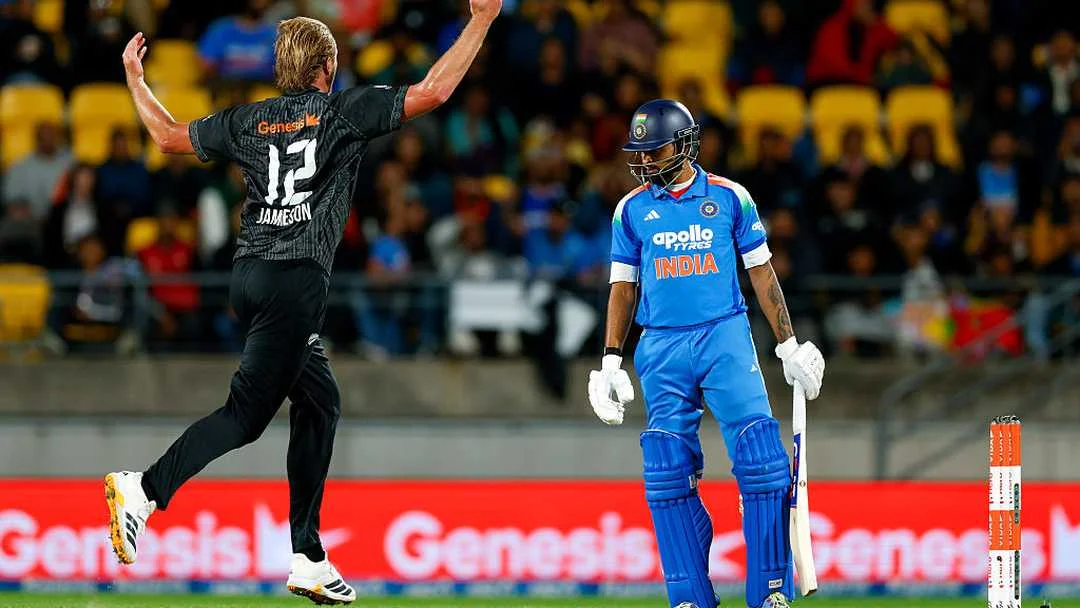
India vs New Zealand 2nd ODI: Short-Ball Trap Mein Phansi Team India, Phir KL Rahul Ne Kaise Palat Di Baazi?
Cricket News Update
India Tour of New Zealand 20262nd ODIMatch AnalysisGNN Exclusive
Short-Ball Trap Mein Phansi Team India, Lekin KL Rahul Ki Masterclass Ne Badal Di Wellington Ki Kahani
India vs New Zealand second ODI mein 135 runs ka target bhi ek serious examination ban gaya. Wellington ki unpredictable pitch, New Zealand ke aggressive short-ball tactics aur baarish ke pressure ke beech KL Rahul ki calculated batting ne India ko DLS equation mein decisive advantage dilaya.
India vs New Zealand 2nd ODI: Wellington ki challenging conditions mein short-pitched bowling dono teams ke liye major tactical factor bani.
News Highlights
135-run chase: India ka relatively modest target bhi seam movement aur uneven bounce ki wajah se complicated ho gaya.
Early collapse: Shubman Gill, Virat Kohli aur Rohit Sharma ke dismissals ke baad India 39/3 par pahunch gaya.
Short-ball strategy: New Zealand ke five batters bhi short-pitched deliveries par dismiss hue.
KL Rahul ka impact: Rahul ne short balls par 14 deliveries mein 24 runs banaye aur outstanding control dikhaya.
Crucial DLS advantage: Rahul ki late acceleration ne India ko rain interruption se pehle DLS par score se aage pahunchane mein important role play kiya.
Shreyas Iyer under pressure: Short-ball challenge ne ek baar phir unki batting technique se judi familiar discussion ko spotlight mein la diya.
Main Story: Wellington Mein 135 Runs Ka Target Itna Mushkil Kaise Bana?
Cricket mein har challenging chase ke peeche bada target hona zaroori nahi. Kabhi-kabhi pitch ki unpredictable nature, bowling discipline aur pressure ke chhote moments ek straightforward pursuit ko bhi intense contest mein badal dete hain.
India vs New Zealand second One Day International mein Wellington ki conditions ne exactly yahi situation create ki. Earlier rain ke baad surface mein retained moisture thi, jisne seam bowlers ko additional assistance di. Ball kabhi sharply lift ho rahi thi, kabhi late movement dikha rahi thi, aur pace bhi consistently predictable nahi thi.
New Zealand ke bowlers ne in conditions ko effectively exploit kiya. Jacob Duffy ne Shubman Gill aur Virat Kohli ko dismiss karke India ki chase par early pressure create kiya.
Shreyas Iyer ne apni innings ki sixth delivery par Duffy ke against cover ke upar spectacular six lagaya. Shot mein timing, wristwork aur confidence ka exceptional combination tha. Lekin uske baad pitch ne unki natural fluency ko considerably restrict kar diya.
India 27/2 par tha. Target chhota tha, lekin batting conditions ne clear kar diya tha ki remaining runs banana routine exercise nahi hone wala.
Rohit Sharma Ka Counterattack Aur Teesra Jhatka
Kyle Jamieson ne Rohit Sharma ko short delivery se challenge karne ki koshish ki. Hitman ne immediate response diya aur ball ko midwicket ke upar six ke liye dispatch kar diya.
Ye shot Rohit ki short-pitched bowling ke against attacking instinct ka impressive example tha. Lekin unki innings bhi zyada der tak nahi chal saki.
Late movement ke against attacking stroke attempt karte hue Rohit dismiss hue aur India ka score 39/3 ho gaya.
Ab chase ki responsibility middle order par shift ho chuki thi. New Zealand ko apni bowling strategy aur attacking field placements ke through pressure badhane ka opportunity mil gaya.
Match Context: India vs New Zealand, Second ODI
SeriesIndia Tour of New Zealand 2026
MatchSecond One Day International
LocationWellington, New Zealand
India Target135 Runs
Critical Chase Phase39/3
Decisive FactorShort-Ball Tactics and DLS
Is match ki defining characteristic surface ka two-paced behaviour tha. Bowlers ko seam movement aur additional bounce mil rahi thi, jiski wajah se batters ko shot selection aur timing dono mein adjustments karne pade.
India ke liye situation particularly interesting thi, kyunki New Zealand ki innings mein bhi short-pitched bowling effective weapon prove hui thi.
Gurnoor Brar ki height aur skiddy bounce ne New Zealand middle order ko challenge kiya. Hosts ne apni bowling innings mein similar approach adopt karte hue Kyle Jamieson aur supporting pace attack ke through Indian batters ko uncomfortable positions mein force kiya.
Short-Ball Battle: Dono Teams Ke Batters Ka Tough Examination
Wellington mein short-pitched deliveries sirf defensive bowling option nahi thi. Ye match ka central tactical weapon ban gayi.
New Zealand ke five batters short balls par dismiss hue. Hosts ki innings mein false-shot percentage India ke comparison mein higher rahi, jisne middle overs ke run-flow ko significantly restrict kiya.
Indian innings mein bhi short-ball strategy ne important wickets produce kiye. Lekin dono teams ke batting responses mein ek critical difference nazar aaya.
New Zealand ke batters largely pressure mein defensive mode mein chale gaye, jabki India ne kuch moments par overly aggressive strokes khele. Dono approaches mein risk tha, lekin Rohit Sharma aur KL Rahul ne controlled attacking shots ke through important runs extract kiye.
Short Balls Ke Against Important Numbers
24 off 14KL Rahul vs Short Balls
39 off 22Rohit and Rahul Combined
5New Zealand Batters Out to Short Balls
Available match analysis ke mutabik Rohit Sharma ka short-length boundary percentage 37.50% raha, jabki KL Rahul ka 28.57% tha.
Short deliveries ke against false-shot percentage mein KL Rahul ne sirf 6.6% record kiya. Tom Latham ne nine short balls face karke three runs banaye aur koi false shot nahi khela.
Ye figures ek important tactical distinction establish karte hain. Sirf short ball ko attack karna enough nahi tha. Real advantage un batters ko mila jo bounce ko early read kar sake aur shot selection par control maintain kar sake.
KL Rahul ka controlled short-ball counterattack India ki difficult chase ka decisive batting contribution bana.
Shreyas Iyer, Axar Patel Aur Naman Dhir: New Zealand Ka Trap Kaise Successful Hua?
Shreyas Iyer: Natural Fluency Se Awkward Dismissal Tak
Shreyas Iyer apni elegant strokeplay aur strong wristwork ke liye pehchane jaate hain. Lekin Wellington mein short-pitched bowling ne unke liye familiar technical challenge present kiya.
Ek delivery par Jacob Duffy ne ball unke face ke paas direct ki, jisse bachne ke attempt mein Iyer ko dramatically backward arch karna pada aur woh ground par gir gaye.
Baad mein ek sharply rising delivery ne unki innings end kar di. Ye dismissal unke earlier cover six se completely different picture present karta tha.
Iyer ke case mein delivery ki quality aur uncomfortable bounce dono important factors the. Isliye dismissal ko sirf poor shot selection tak limit karna fair assessment nahi hoga.
Axar Patel: Repeated Ramp Shot Bana Risk
Axar Patel ne Nathan Smith ki pace use karte hue wicketkeeper ke upar ek inventive ramp shot execute kiya.
Shot effective tha, lekin Matthew Fisher ke against same approach repeat karna expensive prove hua.
New Zealand ne third man par Jacob Duffy ko strategically position kiya tha. Axar ka attempted ramp directly usi area mein gaya aur dismissal complete ho gaya.
Is phase mein required run rate major problem nahi thi. Isliye Axar ka wicket aggressive stroke selection ke risk ko highlight karta hai.
Naman Dhir: Field Placement Aur Short Ball Ka Combination
Naman Dhir bhi New Zealand ki pre-planned short-ball strategy ka shikar hue.
Pull shot ke liye positioned boundary fielder ne catch complete kiya. Ye dismissal demonstrate karta hai ki hosts sirf short deliveries nahi daal rahe the, balki corresponding field placements ke saath complete dismissal plans execute kar rahe the.
KL Rahul Ki Masterclass: Do Balls Ne Badal Di Match Ki Direction
Jab India ke batters short-ball challenge se struggle kar rahe the, KL Rahul ne same bowling length ke against controlled aggression ka exceptional example present kiya.
Nathan Smith ke against consecutive deliveries ka sequence particularly significant tha.
Pehli delivery helmet ki height tak rise hui. Rahul ne panic karne ke bajaye wrists roll karke ball ko controlled manner mein boundary tak pahunchaya.
Agli delivery relatively lower bounce ke saath aayi. Rahul ne length quickly judge ki aur square ke peeche powerful six execute kiya.
Do deliveries, do completely different responses, aur dono successful.
Rahul ne short balls ke against 14 deliveries par 24 runs score kiye. Match mein kisi aur batter ne is length par unse zyada boundaries nahi lagayi.
Unki batting mein sabse impressive aspect attacking intent aur technical control ka balance tha. Woh unnecessary elevation avoid kar sakte the, lekin scoring opportunity milne par full commitment ke saath stroke bhi execute kar rahe the.
DLS Equation Mein Rahul Ka Crucial Contribution
Rain interruptions ke possibility wale match mein Duckworth-Lewis-Stern method ka par score especially important hota hai.
Rahul ke late attacking shots ne India ko DLS par score se aage pahunchane mein decisive role play kiya.
Jab baarish ne dobara match interrupt kiya aur play end hua, India ki earlier acceleration critical prove hui.
Ye sirf runs score karne ki story nahi thi. Ye match situation, weather risk aur bowling tactics ko samajhkar calculated decisions lene ki story thi.
"He's obviously class, right?"Kyle Jamieson on KL Rahul
Jamieson ne Rahul ki quality ko acknowledge kiya. Delhi Capitals ke practice environment mein Rahul ke saath extensive bowling experience ne unhe Indian batter ki technical ability ko closely observe karne ka opportunity diya tha.
Shubman Gill Ka Admission: India Ek Costly Mistake Se Bach Gaya
Match ke baad Shubman Gill ne acknowledge kiya ki chase ke kuch attacking shots ideal nahi the.
Gill ke assessment mein agar India DLS calculation mein sirf four ya five runs se behind reh jaata, toh unnecessary dismissals extremely costly prove ho sakte the.
Unhone relief express kiya ki team difficult situation se successfully nikal gayi.
Is observation ka tactical significance considerable hai. Low-scoring chase mein wickets lose karna hamesha required run rate ki wajah se nahi hota. Kabhi-kabhi attacking instinct aur situation awareness ke beech imbalance bhi pressure create kar deta hai.
India ke liye positive aspect ye raha ki Rahul ki calculated aggression aur Rohit ke earlier boundary contributions ne enough scoring momentum provide kiya.
Why This News Matters: India Ke Batting Approach Ke Liye Important Lessons
India vs New Zealand second ODI ka biggest takeaway short-pitched bowling ke against individual technique se aage jaata hai.
Wellington ki conditions ne demonstrate kiya ki difficult surfaces par batters ko aggression aur restraint ke beech constantly balance maintain karna padta hai.
Shreyas Iyer ke dismissal ne rising deliveries ke against unki technique par discussion ko dobara relevant banaya. Axar Patel aur Naman Dhir ke wickets ne field awareness aur shot selection ki importance highlight ki.
Rohit Sharma ne attacking counterplay provide kiya, jabki KL Rahul ne comparatively greater control ke saath same challenge ko scoring opportunity mein convert kiya.
India ke perspective se ye performance simultaneously encouraging aur cautionary thi. Team ne difficult conditions mein result secure kiya, lekin batting decisions mein improvement ki clear opportunities bhi saamne aayi.
New Zealand ke liye bhi lesson significant tha. Unki bowling plans effective the, lekin apni innings mein short-ball pressure ko handle karne mein difficulties ne final equation ko influence kiya.
GNN Analysis: Rahul Ki Situation Awareness Ne Difference Create Kiya
Guru News Network (GNN), powered by The Guru Gyan ke tactical assessment mein Wellington encounter ka defining difference individual shot-making se zyada decision quality thi.
New Zealand ne India ke batting order ko carefully targeted short balls aur aggressive field placements se challenge kiya. India ne kuch wickets avoidable attacking attempts mein lose kiye, lekin KL Rahul ne same conditions mein better risk management demonstrate kiya.
Rahul ki innings ye underline karti hai ki pressure cricket mein technical ability tab most valuable hoti hai jab woh match awareness ke saath combine ho.
Latest India cricket news, international series analysis aur detailed match developments ke liye Guru News Network follow karein.
Cricket analytics aur match intelligence ke liye The Guru Gyan, aur live scores aur free cricket live line ke liye The Guru Gyan Live Line available hai.
Cricket Ki Har Important Story, Ab Expert Perspective Ke Saath
International cricket ki major developments, tactical match analysis aur important player performances ko samajhne ke liye Guru News Network ke saath connected rahein. Detailed cricket intelligence ke liye The Guru Gyan explore karein.
Content Authenticity: This original content is exclusively authored and published by The Guru Gyan. To maintain search engine integrity and avoid content duplication, this article originally appeared on our official portal at https://thegurugyan.com/cricket-news/.
Strict Anti-Gambling Policy: The Guru Gyan is a platform dedicated to cricket match intelligence and analytics. We strictly DO NOT support, promote, or encourage any form of betting, gambling, or illegal activities.
Beware of Impersonators: We prioritize our users' digital safety. The Guru Gyan does not operate any official Telegram channel or group. Please rely only on our verified domains for authentic information: https://thegurugyan.com and https://live.thegurugyan.com.
Contact Our Core Team: For genuine business inquiries, feedback, or support, reach out directly to Aakash Rai at +91 9826913203 or +91 9111191152.
वेलिंगटन का मैदान... आसमान में बादलों का पहरा... पिच पर नमी... और हवा में एक अजीब सी बेचैनी! सामने थी New Zealand की टीम, और लक्ष्य था सिर्फ एक सौ पैंतीस रन। सुनने में आसान... लेकिन क्रिकेट की इस कहानी में असली खतरा रनों की संख्या में नहीं, बल्कि उस गेंद में छिपा था, जो कभी अचानक उछल रही थी, तो कभी आखिरी पल में अपना रास्ता बदल रही थी।
यह मुकाबला था India और New Zealand के बीच दूसरे One Day International का। और इस मैच में एक ऐसी रणनीति ने दोनों टीमों की परीक्षा ली, जिसका नाम है... Short Ball!
कहानी की शुरुआत हुई New Zealand की बल्लेबाजी से। Gurnoor Brar की लंबाई, तेज गेंदबाजी और खतरनाक उछाल ने मेजबान टीम के मध्यक्रम को परेशान कर दिया। New Zealand के पांच बल्लेबाज छोटी गेंदों का शिकार बने। बल्लेबाजों के शॉट्स में नियंत्रण की कमी दिखाई दी, और रन बनाने की रफ्तार पर भी असर पड़ा।
लेकिन असली रोमांच अभी बाकी था!
India को जीत के लिए सिर्फ एक सौ पैंतीस रन चाहिए थे। मगर New Zealand के गेंदबाजों ने तय कर लिया था कि यह लक्ष्य आसानी से हासिल नहीं होने देंगे।
Jacob Duffy ने अपनी सटीक Seam Bowling से Shubman Gill और Virat Kohli को पवेलियन भेज दिया। भारतीय पारी की शुरुआत लड़खड़ा चुकी थी।
फिर मैदान पर आए Shreyas Iyer... जिन्हें क्रिकेट प्रशंसक प्यार से Sarpanch Sahab भी कहते हैं।
अपनी पारी की छठी गेंद पर Iyer ने कलाईयों का कमाल दिखाया। बल्ला घूमा... गेंद Cover के ऊपर से उड़ती हुई सीधे Boundary के पार चली गई। शानदार छक्का!
एक पल के लिए लगा कि Sarpanch Sahab इस मुश्किल पिच को भी अपनी शानदार बल्लेबाजी से काबू कर लेंगे।
लेकिन उसके बाद कहानी बदलने लगी।
गेंद कभी तेजी से उछलती, कभी बल्ले के पास पहुंचकर दिशा बदलती। Iyer की बल्लेबाजी की सहज लय खोने लगी। एक खतरनाक गेंद उनके चेहरे की ओर आई, और उससे बचने के लिए उन्हें पीछे झुकते हुए जमीन पर गिरना पड़ा।
आखिरकार एक और तेज उछाल वाली गेंद ने उनकी पारी समाप्त कर दी। वही Short Ball, जिसने पहले भी उनकी बल्लेबाजी को लेकर कई सवाल खड़े किए थे, एक बार फिर चर्चा के केंद्र में आ गई।
दूसरी ओर थे Rohit Sharma... दुनिया भर में मशहूर Hitman!
Kyle Jamieson ने उन्हें छोटी गेंद से डराने की कोशिश की। लेकिन Hitman ने जवाब बल्ले से दिया। जोरदार Pull Shot... और गेंद Midwicket के ऊपर से छह रन के लिए बाहर!
उस एक शॉट में Rohit का आत्मविश्वास साफ दिखाई दिया।
मगर Wellington की पिच किसी एक बल्लेबाज के नियंत्रण में आने वाली नहीं थी। गेंद ने आखिरी क्षण में हरकत की, Rohit ने आक्रामक शॉट खेलने की कोशिश की, और उनका विकेट भी गिर गया।
India अब उनतालीस रन पर तीन विकेट गंवा चुका था।
लक्ष्य छोटा था... मगर दबाव बड़ा हो चुका था!
अब जिम्मेदारी थी Axar Patel और मध्यक्रम के बाकी बल्लेबाजों पर।
Axar ने Nathan Smith की तेज गेंद का इस्तेमाल करते हुए विकेटकीपर के ऊपर से शानदार Ramp Shot खेला। यह एक चतुराई भरा शॉट था, जिसने कुछ देर के लिए दबाव कम किया।
लेकिन New Zealand ने इस शॉट को ध्यान से देखा था।
जब Axar ने Matthew Fisher के खिलाफ वही शॉट दोहराने की कोशिश की, तो Third Man पर Jacob Duffy पहले से तैयार खड़े थे। गेंद सीधे फील्डर के पास पहुंची... और Axar की पारी समाप्त!
इसके बाद Naman Dhir भी Short Ball के जाल में फंस गए। Pull Shot के लिए Boundary पर फील्डर तैनात था, और गेंद उसी के हाथों में चली गई।
New Zealand की रणनीति काम कर रही थी।
भारतीय बल्लेबाजों को सिर्फ गेंदबाज नहीं, बल्कि पूरी Field Placement चुनौती दे रही थी।
लेकिन इसी मुश्किल घड़ी में कहानी का सबसे महत्वपूर्ण किरदार सामने आया... KL Rahul!
जब दूसरे बल्लेबाज छोटी गेंदों पर परेशान हो रहे थे, Rahul ने वही गेंदें अपने लिए रन बनाने का अवसर बना लीं।
Nathan Smith ने एक तेज गेंद डाली, जो सीधे Helmet की ऊंचाई तक उछली। Rahul ने घबराने के बजाय अपनी कलाईयों को मोड़ा, गेंद को नियंत्रित रखा, और चार रन हासिल कर लिए।
अगली गेंद!
इस बार उछाल थोड़ा कम था। Rahul ने लंबाई जल्दी पहचान ली। बल्ला पूरी ताकत से घूमा... और गेंद Square के पीछे से छह रन के लिए निकल गई!
लगातार दो गेंदें... पहले चौका, फिर छक्का!
यह सिर्फ आक्रामक बल्लेबाजी नहीं थी। यह गेंद की गति, उछाल और मैच की परिस्थिति को समझकर लिया गया बेहद सटीक फैसला था।
Rahul ने छोटी गेंदों के खिलाफ चौदह गेंदों पर चौबीस रन बनाए। उनका False Shot Percentage सिर्फ छह दशमलव छह प्रतिशत रहा।
दूसरी तरफ Rohit Sharma और KL Rahul ने मिलकर छोटी गेंदों के खिलाफ बाईस गेंदों में उनतालीस रन बनाए।
इन रनों की कीमत कुछ ही देर बाद समझ आने वाली थी।
क्योंकि आसमान में बादल फिर घिरने लगे थे।
बारिश का खतरा बढ़ रहा था... और अब मुकाबला सिर्फ New Zealand के गेंदबाजों से नहीं, बल्कि Duckworth Lewis Stern Method के हिसाब से तय होने वाले Par Score से भी था।
Rahul के महत्वपूर्ण Boundary Shots ने India को उस जरूरी स्कोर से आगे पहुंचा दिया।
फिर बारिश लौट आई... और खेल दोबारा शुरू नहीं हो सका।
New Zealand की वापसी की उम्मीदें मौसम के साथ समाप्त हो गईं। India ने मुश्किल परिस्थितियों से निकलकर मुकाबला अपने नाम कर लिया।
मैच के बाद Shubman Gill ने स्वीकार किया कि कुछ भारतीय बल्लेबाजों के आखिरी शॉट्स अच्छे फैसले नहीं थे। अगर India बारिश के कारण चार या पांच रन से पीछे रह जाता, तो यही गलतियां बहुत महंगी पड़ सकती थीं।
Kyle Jamieson ने भी KL Rahul की बल्लेबाजी की तारीफ की। Delhi Capitals के अभ्यास सत्रों में Rahul को करीब से देखने वाले Jamieson उनकी तकनीक और गुणवत्ता को अच्छी तरह जानते थे।
इस मुकाबले की सबसे बड़ी सीख यही थी कि मुश्किल पिच पर हर गेंद को ताकत से मारना जरूरी नहीं होता।
कभी गेंद को छोड़ना पड़ता है... कभी उसकी गति का इस्तेमाल करना पड़ता है... और कभी सही मौके पर पूरी ताकत लगानी पड़ती है।
Shreyas Iyer, Axar Patel और Naman Dhir के विकेटों ने जल्दबाजी की कीमत दिखाई। Rohit Sharma के आक्रामक शॉट्स ने जवाबी हमला करने का रास्ता दिखाया। लेकिन KL Rahul ने साबित किया कि दबाव के समय समझदारी और नियंत्रण कितने महत्वपूर्ण होते हैं।
Wellington की इस कहानी में जीत सिर्फ बल्ले की ताकत से नहीं मिली... जीत मिली सही समय पर सही फैसला लेने से।
और क्रिकेट की ऐसी ही रोमांचक कहानियों, गहरे विश्लेषण और मैदान के हर महत्वपूर्ण मोड़ को समझने के लिए जुड़े रहिए Guru News Network के साथ, जो powered है द गुरु ज्ञान से।
जहां क्रिकेट सिर्फ स्कोर नहीं... एक पूरी कहानी है। जहां हर गेंद के पीछे छिपी रणनीति को समझने की कोशिश होती है।
मैच की ताजा जानकारी, क्रिकेट विश्लेषण और Live Line के लिए विजिट कीजिए... द गुरु ज्ञान डॉट कॉम।
द गुरु ज्ञान... क्रिकेट को सिर्फ देखिए मत, उसकी हर चाल को समझिए!
Wellington was wrapped in uncertainty. Rain had already left its mark on the surface. Moisture lingered beneath the pitch, the ball was moving unpredictably, and every delivery seemed capable of changing the direction of the contest.
India needed just one hundred and thirty-five runs to overcome New Zealand in the second One Day International.
On paper, the target appeared modest.
But cricket has a remarkable habit of turning simple numbers into extraordinary stories.
And on this occasion, the central character was not a single batter or bowler.
It was the short ball.
Earlier in the match, New Zealand's batting lineup had discovered how uncomfortable life could become against pace and steep bounce. Gurnoor Brar, using his height and the assistance of the surface, helped create serious problems for the home side's middle order.
Five New Zealand batters eventually fell to short-pitched deliveries.
Their false-shot percentage was higher than India's, and the pressure significantly restricted their ability to score through the middle overs.
Yet when India began their pursuit, New Zealand had a plan of their own.
Jacob Duffy immediately made the new ball speak.
Shubman Gill departed. Virat Kohli followed. Two important wickets had fallen, and the visitors were suddenly being asked to work considerably harder than the target had suggested.
Then came Shreyas Iyer.
Known affectionately among many supporters as Sarpanch Sahab, Iyer possesses an elegant, wrist-dominated batting style capable of making even difficult conditions appear manageable.
Six balls into his innings, he produced a moment of brilliance.
Against Duffy, his wrists moved almost effortlessly, sending the ball sailing over cover for six.
For a fleeting moment, the pitch seemed irrelevant.
But the surface soon reclaimed control.
The ball continued to seam, lift, and occasionally behave at two different speeds. Iyer struggled to rediscover his natural rhythm.
One sharply rising delivery from Duffy forced him into an extraordinary evasive movement. He arched backward to escape the ball and ended up falling onto his back.
Eventually, another hostile short delivery brought his innings to an uncomfortable conclusion.
It was an especially significant dismissal because short-pitched bowling had previously been a sensitive subject in discussions about Iyer's batting.
The debate was alive once again.
Meanwhile, Rohit Sharma, the celebrated Hitman, had his own response to the challenge.
Kyle Jamieson attempted to test him with a bouncer.
Rohit answered with authority.
A powerful stroke sent the ball soaring over midwicket for six, reminding everyone why he remains such a dangerous opponent when bowlers offer him a short length.
But even the Hitman could not escape the conditions indefinitely.
Late movement defeated his attacking intentions, and India slipped to thirty-nine for three.
Suddenly, the pursuit had become a contest of patience, judgment, and nerve.
Axar Patel arrived with the responsibility of stabilizing the innings.
He initially found an inventive scoring option, using Nathan Smith's pace to ramp the ball over the wicketkeeper.
It was a clever response to a difficult bowling plan.
But New Zealand were watching.
When Axar attempted a similar stroke against Matthew Fisher, Jacob Duffy was already stationed at third man.
The ball travelled directly into the waiting fielder's hands.
A promising scoring option had become a perfectly anticipated dismissal.
Naman Dhir encountered a similar fate.
A short delivery invited the pull shot, but New Zealand had positioned a boundary fielder precisely for that response.
Another wicket fell.
The hosts were not merely bowling short.
They were building complete tactical traps, combining length, bounce, and field placement to influence the decisions of India's batters.
And yet, amid this increasingly uncomfortable chase, one player began to demonstrate a different way of handling the same challenge.
KL Rahul.
Where others had struggled to balance attack and control, Rahul brought both qualities together.
His most revealing moment came against Nathan Smith.
The first delivery climbed toward helmet height.
Rather than reacting with uncontrolled aggression, Rahul rolled his wrists beautifully, keeping the ball down and collecting four runs.
The next delivery bounced slightly lower.
Rahul recognized the difference immediately.
He adjusted his position, committed to the stroke, and powered the ball behind square for six.
Two consecutive deliveries.
Two different technical solutions.
Ten important runs.
It was a demonstration of batting intelligence under pressure.
Across fourteen short-pitched deliveries, Rahul collected twenty-four runs. No other batter struck more boundaries against that length during the contest.
His false-shot percentage against short balls was just six point six percent.
That number offered a revealing contrast to the difficulties experienced elsewhere in the match.
Rohit Sharma recorded a boundary percentage of thirty-seven point five zero against short lengths, while Rahul's figure stood at twenty-eight point five seven.
Together, Rohit and Rahul accumulated thirty-nine runs from twenty-two short-pitched deliveries.
Those contributions would soon acquire an importance far beyond the scorecard.
Because the rain had never truly disappeared from the story.
The possibility of another interruption meant that the Duckworth Lewis Stern calculation was becoming increasingly important.
India needed not only to survive New Zealand's bowling attack, but also to remain ahead of the required par score if the weather ended the contest prematurely.
Rahul's calculated acceleration made the difference.
His attacking strokes carried India beyond the crucial threshold.
Then the rain returned.
And this time, the match could not continue.
New Zealand's hopes of forcing a dramatic turnaround were extinguished by the weather, while India's earlier scoring momentum proved decisive.
The visitors had survived.
But the victory came with lessons.
After the match, Shubman Gill acknowledged that some of India's attacking decisions had been far from ideal.
He recognized that losing the match by four or five runs under the Duckworth Lewis Stern calculation would have made those mistakes particularly painful.
Kyle Jamieson, meanwhile, offered his appreciation of Rahul's quality.
Having bowled to him extensively during Delhi Capitals practice sessions, Jamieson understood the technical strength and composure that Rahul could bring to a difficult situation.
His assessment was simple.
Rahul was a class player.
And the evidence in Wellington had been compelling.
For New Zealand, the short ball had been both a weapon and a weakness.
Their own batting lineup had struggled against it, while their bowlers later used it to threaten India's pursuit.
For India, the story was equally complex.
Shreyas Iyer encountered an uncomfortable reminder of an old challenge.
Axar Patel and Naman Dhir demonstrated how quickly attacking decisions can become predictable when field placements are carefully designed.
Rohit Sharma provided an aggressive counterattack.
But Rahul offered something more complete.
He understood when to absorb pressure, when to use the bowler's pace, and when to release the full power of his bat.
The most important lesson from Wellington was not that short-pitched bowling is impossible to master.
It was that mastery requires more than courage.
It demands judgment.
The ability to recognize a changing bounce, to anticipate the bowler's intentions, and to understand the precise moment when risk becomes opportunity.
India's pursuit was imperfect.
At times, it was uncomfortable.
But when the final interruption arrived, the visitors had done just enough.
And in a match shaped by uncertainty, KL Rahul's composure became the defining difference.
That is what makes cricket so compelling.
A modest target can conceal enormous pressure. A single delivery can expose a weakness. And two beautifully judged strokes can alter the course of an entire contest.
For more stories that explore the strategy, intelligence, and human drama behind the game, stay connected with Guru News Network, powered by The Guru Gyan.
Discover thoughtful cricket analysis, important match developments, and a deeper understanding of the moments that shape the sport.
Visit The Guru Gyan dot com for cricket intelligence, and explore The Guru Gyan Live Line for live match updates.
The Guru Gyan. Because the finest cricket stories are not simply about who won.
They are about understanding how the game was won... and why every moment mattered.
More from The Guru Gyan
Read related cricket news, then jump to the live products that support this story with real-time score, series coverage and prediction transparency.