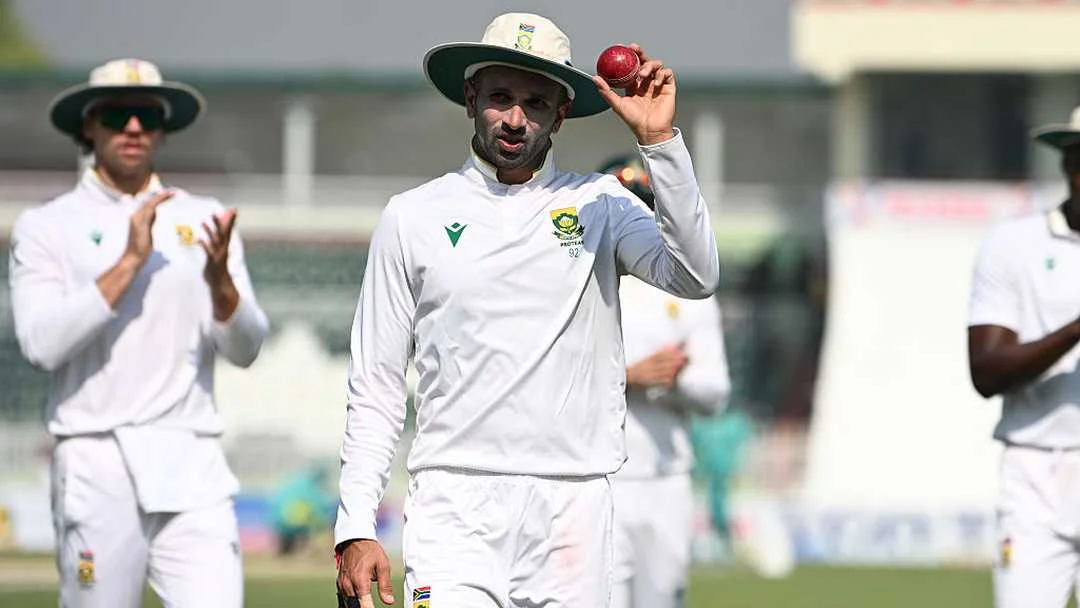
From WACA Gamble To Spin Standard: How Keshav Maharaj Changed South African Cricket
Cricket News Update
एक समय था... जब South Africa में spin bowling को भरोसे की नहीं, मजबूरी की भाषा समझा जाता था। Fast bowlers सामने होते थे... और spinner अक्सर तब बुलाया जाता था, जब partnership टूट नहीं रही हो, session खत्म होने वाला हो, या pitch इतनी थक चुकी हो कि शायद slow bowling को भी कुछ मिल जाए। फिर कहानी में प्रवेश हुआ Keshav Maharaj का। Durban के Northlands Primary School में बारह साल का एक लड़का fast bowling करता था। एक दिन coach Andrew Bennison की बात उसे पसंद नहीं आई... और गुस्से में उसने spin डालने का फैसला किया। जो reaction एक पल की नाराजगी से शुरू हुआ था... वही South African cricket की direction बदलने वाला मोड़ बन गया। Andrew Bennison और Keshav के father Athmanand Maharaj ने उस talent को पहचाना, संभाला, और धीरे-धीरे एक ऐसा bowler तैयार हुआ जो सिर्फ overs पूरा करने नहीं, match बदलने आया था। November 2016... WACA, Australia। Debut का stage ऐसा, जहाँ visiting spinner से आम तौर पर चमत्कार की उम्मीद नहीं की जाती। Keshav Maharaj खुद भी शायद playing eleven की उम्मीद लेकर नहीं पहुंचे थे। फिर Dale Steyn shoulder injury के साथ मैदान से बाहर गए... और अचानक responsibility बढ़ गई। Steve Smith crease से लगभग तीन metre आगे निकले... Keshav Maharaj की delivery pad से टकराई... decision out। Review हुआ... लेकिन umpire's call ने फैसला कायम रखा। Peter Neville और Mitchell Starc भी उनके wickets बने। First innings में Maharaj ने 18.2 overs डाले, economy 3.05 रही... और bat से 34 balls पर unbeaten 41 भी बनाए, जिसमें two fours और three sixes शामिल थे। South Africa ने Australia को 539 का विशाल target दिया। Second innings में Maharaj और भी disciplined रहे... 40.1 overs, economy 2.34। Nathan Lyon का wicket मिला... और वही wicket South Africa की 177-run victory पर अंतिम मुहर बन गया। यह सिर्फ debut नहीं था... यह signal था कि South Africa का spinner pressure भी झेल सकता है, control भी दे सकता है, और winning moment भी बना सकता है। धीरे-धीरे Keshav Maharaj ने red-ball identity से आगे बढ़ने की जिद दिखाई। उनका सपना था hundred Tests खेलना... क्योंकि उनके लिए इतने लंबे समय तक टीम में रहना इस बात का प्रमाण होता कि वह कुछ सही कर रहे हैं। लेकिन ambition वहीं नहीं रुकी। वह white-ball cricket में भी South Africa के best options में शामिल होना चाहते थे। शुरुआत आसान नहीं थी। उनके पहले seven Tests के दौरान South Africa ने eleven O.D.I matches और four International Twenty Twenty matches खेले... लेकिन Maharaj उनमें शामिल नहीं हुए। Imran Tahir white-ball attack के बड़े नाम थे, और जब second spinner की जरूरत होती, Tabraiz Shamsi आगे रहते। Maharaj को लगभग Test specialist समझ लिया गया था। फिर Mark Boucher के coaching phase ने दरवाजा खोला। Boucher ने पूछा कि वह white-ball cricket क्यों नहीं खेल रहे। Maharaj domestic cricket लौटे... numbers बनाए... 2019-20 List A season में 17 wickets लिए, और Twenty Twenty cricket में 6.60 की respectable economy रखी। Boucher ने अपना वादा निभाया... और Maharaj का white-ball chapter खुल गया। February-March 2020 से लेकर source में दिए गए period तक South Africa के 79 O.D.I matches में Maharaj ने 52 खेले। उसी समय के 115 International Twenty Twenty matches में उन्होंने 54 appearances कीं। यह बदलाव सिर्फ selection का नहीं था... mindset का था। South Africa, जो seam bowling की जमीन मानी जाती है, वहाँ finger spin अब backup plan नहीं रहा। Russell Domingo, Faf du Plessis, Imran Tahir, Mark Boucher, Temba Bavuma, Aiden Markram और Shukri Conrad जैसे नामों ने अलग-अलग समय पर spin को trust दिया... जबकि Claude Henderson, Simon Harmer, Dane Piedt, Shaun von Berg और Prenelan Subrayen जैसे bowlers ने domestic structure में slow bowling की value मजबूत की। Numbers भी बदलते गए। 2000-01 से 2009-10 के ten domestic first-class seasons में slow bowler सिर्फ two times leading wicket-taker बना, एक बार shared position के साथ। अगले ten summers, 2019-20 तक, यह five times हुआ। 2020-21 से source में बताए गए five-season stretch में spin four times list के top पर रहा। यानी बदलाव सिर्फ Maharaj के आसपास की कहानी नहीं था... पूरा system बदल रहा था। फिर भी उस बदलाव का सबसे साफ चेहरा Keshav Maharaj बने। उनका belief सीधा है... spinner को सिर्फ defensive option मत समझो। Best ball ऐसी होनी चाहिए जो wicket भी ले सके और scoring भी रोक सके। Captain का trust सबसे बड़ा factor है। Temba Bavuma spin को side में चाहता है। Aiden Markram खुद spinner है। Shukri Conrad conditions के अनुसार multiple spinners चुनने से नहीं डरते। यही ecosystem Maharaj को एक ऐसे senior player में बदल चुका है जो practice में instructions देता है, teammates को guide करता है, और spin bowling के लिए लगभग evangelist की तरह खड़ा दिखाई देता है। अब age 36 पर career का अंतिम हिस्सा दूर नहीं है... लेकिन कहानी खत्म होती नहीं दिखती। Keshav Maharaj spin consultant या high performance director जैसे future roles के बारे में सोच रहे हैं। उनका playing career कभी खत्म होगा... मगर South Africa में spin को मिला respect शायद वापस पुराने दौर में नहीं जाएगा। यही Keshav Maharaj की असली legacy है। उन्होंने सिर्फ wickets नहीं लिए... उन्होंने विश्वास कमाया। उन्होंने सिर्फ bowling नहीं की... उन्होंने culture बदला। और शायद यही वजह है कि आज South Africa में spin bowling सिर्फ जरूरी नहीं... आकर्षक भी लगती है। आप सुन रहे थे Guru News Network, powered by द गुरु ज्ञान। ऐसी ही cinematic cricket stories, trusted analysis, smart match intelligence और fast live updates के लिए जुड़े रहिए द गुरु ज्ञान के साथ... क्योंकि जब cricket की कहानी गहराई से समझी जाए, तभी हर wicket, हर spell और हर turning point सच में याद रह जाता है।
For decades, spin in South African men's cricket often lived in the margins. The country's pitches naturally favored pace, captains trusted fast bowlers first, and slow bowling was frequently treated as a holding option, a late-session convenience, or a last resort when the quicks could not break a partnership. Then came Keshav Maharaj, and the old hierarchy began to bend. His story did not begin with a grand plan to become South Africa's defining finger spinner. At Northlands Primary School in Durban, Maharaj was a fast bowler. At the age of twelve, irritated by a comment from coach Andrew Bennison, he decided to bowl spin almost as an act of rebellion. The decision was impulsive. The consequences were not. Bennison saw potential, and together with Maharaj's father, Athmanand Maharaj, helped shape the skill that would eventually change how an entire cricket culture viewed slow bowling. His Test debut arrived in November 2016 at the WACA, one of the least obvious places for a visiting spinner to announce himself. Maharaj did not even expect to play. But when Dale Steyn left the field with a shoulder injury early in the match, South Africa needed more from him than anyone had planned. He answered. Steve Smith advanced almost three metres down the pitch and was struck on the pad. The decision was given out, reviewed, and upheld through umpire's call. Maharaj also removed Peter Neville and Mitchell Starc. He bowled 18.2 overs in Australia's first innings at an economy rate of 3.05, then added an unbeaten 41 from 34 balls, with two fours and three sixes, helping South Africa build a target of 539. In the second innings, he became even more controlled. His 40.1 overs represented more than a third of South Africa's total workload in a makeshift attack. He conceded at only 2.34 runs an over. His dismissal of Nathan Lyon, again confirmed through umpire's call, completed South Africa's 177-run victory. It was not a spectacular debut because of a giant wicket haul. It was important because it showed something South African cricket had been slow to believe: a spinner could carry pressure, create control, survive on an unfriendly surface, and still matter at the decisive moment. From there, Maharaj's ambition expanded. His early personal target was to play one hundred Tests, because reaching that milestone would mean he had remained valuable for a very long time. Yet Test cricket alone soon stopped being enough. He wanted to prove that finger spin had a place in One Day International and International Twenty Twenty cricket as well. The system, however, did not immediately agree. During his first seven Tests, South Africa played eleven O.D.I matches and four International Twenty Twenty matches without selecting him. Imran Tahir dominated the white-ball spin role, while Tabraiz Shamsi often became the second option when two spinners were used. Maharaj was effectively categorized as a Test specialist. The shift came under Mark Boucher. After becoming South Africa's coach in December 2019, Boucher asked Maharaj why he was not playing white-ball cricket. He sent him back to domestic competition with a clear plan and promised that strong performances would be rewarded. Maharaj delivered. In South Africa's 2019-20 List A season, only four bowlers took more wickets than his seventeen. In Twenty Twenty cricket, he took five wickets but maintained a respectable economy rate of 6.60. Boucher kept his word. From the home O.D.I series against Australia in February and March 2020 onward, Maharaj became a regular multi-format selection. Across the period described in the source, he played 52 of South Africa's 79 O.D.I matches and 54 of 115 International Twenty Twenty matches. That transformation was not his alone. Russell Domingo arrived without many of the old playing prejudices. Faf du Plessis understood spin deeply as a captain. Imran Tahir made attacking spin impossible to ignore. Claude Henderson, Simon Harmer, Dane Piedt, Shaun von Berg, and Prenelan Subrayen strengthened the domestic case for slow bowling. Mark Boucher created a white-ball path. Temba Bavuma backed the presence of a spinner. Aiden Markram, himself a spinner, understood the value instinctively. Shukri Conrad remained willing to select more than one spinner when conditions justified it. Together, these forces created an ecosystem in which Maharaj could become more than an individual success. He became evidence that South African cricket had changed. The domestic numbers support that broader shift. Across the ten seasons from 2000-01 to 2009-10, a slow bowler finished as the leading first-class wicket-taker only twice, including one shared season. Across the next ten summers, through 2019-20, it happened five times. From 2020-21 across the five-season stretch described in the source, spin led the list four times. The movement was unmistakable. Slow bowling had stopped being an eccentric exception and become a central part of the country's competitive structure. Maharaj's own philosophy explains why he fitted that change so well. He rejects the simple division between attacking and defensive spinners. His goal is to deliver his best ball, one that must be good enough either to take a wicket or prevent the batter from scoring. The field may change. The intent does not. He also believes captaincy matters enormously. A spinner needs a leader who understands that slow bowlers may be attacked, yet can still break games open and control entire passages of play. That belief has made Maharaj more than a bowler inside South Africa's system. Around training sessions, he is described as vocal, demanding, instructive, and deeply competitive, almost functioning at times like an additional captain or coach. At thirty-six, Maharaj is naturally closer to the end of his playing career than the beginning, and he has already thought about life beyond the field, including work as a spin consultant or high performance director. That possibility makes his story larger still. The most meaningful part of the Keshav Maharaj era may not be how many wickets he finishes with, or whether he reaches one hundred Tests. It may be what survives after he is gone. South Africa will probably always produce fast bowlers in abundance. Its pitches will still reward seam. But the automatic suspicion around spin has weakened. A spinner can now be trusted, selected across formats, given attacking fields, and treated as a genuine match-winner. Maharaj did not create that revolution alone, but he became its clearest symbol. He made slow bowling relevant, credible, and ambitious in a country that once preferred to look elsewhere. You were listening to Guru News Network, powered by The Guru Gyan. For more deeply told cricket stories, trusted analysis, smart match intelligence, and fast live updates, stay connected with The Guru Gyan... where the game is not reduced to a scorecard, because the finest cricket stories deserve to be understood, felt, and remembered.
South Africa CricketKeshav MaharajSpin RevolutionGuru News Network
From overlooked option to trusted weapon: Keshav Maharaj ne South Africa me spin ka status kaise badla
Keshav Maharaj ki journey sirf ek successful left-arm spinner ki kahani nahi hai. Ye South African cricket ke mindset shift ki story hai, jahan spin bowling holding role se nikal kar pressure, wickets, multi-format selection aur leadership trust ka serious weapon ban gayi.
Keshav Maharaj ka career South Africa me spin bowling ke perception change ka central symbol ban chuka hai.
News Highlights
Keshav Maharaj ne South Africa me spin ko ek secondary holding option se multi-format match weapon banane wali generation ka face banaya.
Unka Test debut November 2016 me WACA par hua, jahan South Africa ne Australia ko 177 runs se haraya.
Debut Test me Maharaj ne Steve Smith, Peter Neville aur Mitchell Starc ko dismiss kiya, aur 34 balls par unbeaten 41 bhi banaye.
Shuruat me unhe largely Test specialist maana gaya, lekin Mark Boucher ke coaching phase ke baad unka white-ball role dramatically expand hua.
Source period ke mutabik Maharaj ne February-March 2020 se South Africa ke 79 O.D.I matches me se 52 aur 115 International Twenty Twenty matches me se 54 khele.
Domestic first-class cricket me bhi slow bowlers ka influence sharply bada, jo South Africa ke broader spin mindset shift ko support karta hai.
Main Story: South Africa ka spin mindset ek din me nahi badla
South African men's cricket ka traditional identity pace ke around build hua. Conditions seam ko help karti rahi, quality fast bowlers ki supply kabhi kam nahi hui, aur captains ke liye spinner aksar partnership break na hone par alternative, session ke end me quick over, ya worn surface par situational option hota tha.
Isi environment me Keshav Maharaj ka rise important ban jata hai. Unhone slow bowling ko sirf control tak limited nahi rakha. Unka role pressure build karne, batting mistakes force karne, wickets create karne aur multiple formats me selection justify karne tak expand hua.
Ye shift Maharaj ke ek individual career se bada tha. Russell Domingo, Faf du Plessis, Imran Tahir, Mark Boucher, Temba Bavuma, Aiden Markram aur Shukri Conrad jaise figures ne alag phases me spin ko space, trust aur tactical importance di. Domestic structure me Claude Henderson, Simon Harmer, Dane Piedt, Shaun von Berg aur Prenelan Subrayen jaise bowlers ne bhi slow bowling ki credibility build ki.
The Origin Story: Fast bowler se spinner banne ka unexpected turn
Maharaj ka spin career kisi carefully scripted academy plan se start nahi hua tha. Northlands Primary School, Durban me 12 saal ki age me wo fast bowling karte the. Nets me coach Andrew Bennison ki ek comment se irritated hokar unhone spin bowl karne ka decision liya.
Wahi emotional reaction career-defining turning point ban gaya. Bennison ne jaldi hi unki spin potential identify ki, aur Maharaj ke father Athmanand Maharaj, jo provincial level wicketkeeper aur teacher rahe, mentoring process ka major part bane.
"I was a fast bowler then... I decided to bowl spin."Keshav Maharaj, recalling his school days
Story ka irony ye hai ki jis style ko unhone coach ko irritate karne ke liye try kiya, wahi style unhe South Africa ke most influential modern spinners me le aayi.
Maharaj ka rise ek larger cultural change ke saath hua, jahan South Africa ne spin ko increasingly proactive role me use karna shuru kiya.
WACA 2016: Debut jahan trust ka foundation bana
November 2016 me Maharaj ka first Test Australia ke against WACA par aaya. Venue aur opposition ko dekhte hue visiting spinner ka debut unusual enough tha, aur Maharaj khud bhi squad me aane ke baad playing eleven ki guarantee expect nahi kar rahe the.
Match ka balance tab badla jab Dale Steyn second day ke early phase me shoulder problem ke saath field se chale gaye. South Africa ko Maharaj se expected se zyada overs chahiye the, aur unhone pressure absorb kiya.
Steve Smith wicket ne early statement diya
Steve Smith Maharaj ki 23rd delivery par crease se almost three metres down aaye. Ball bat ko beat karke pad par lagi, Aleem Dar ne out diya, aur review ke baad umpire's call se decision survive hua. Maharaj ne Peter Neville aur Mitchell Starc ko bhi dismiss kiya.
First innings me unhone 18.2 overs me 3.05 economy ke saath bowl kiya. Batting me 34 balls par unbeaten 41 banaye, jisme two fours aur three sixes the. South Africa ne Australia ko 539 ka target diya.
Second innings me Maharaj ne 40.1 overs ki heavy workload li aur 2.34 economy maintain ki. Nathan Lyon ko leg-before dismiss karke unhone South Africa ki 177-run victory complete ki.
Test DebutWACA, November 2016
First-Innings Overs18.2
Batting Contribution41 not out off 34
Second-Innings Overs40.1
Second-Innings Economy2.34
South Africa ResultWon by 177 runs
Red-ball specialist label se multi-format spinner tak
Maharaj ka early international career largely Test cricket ke around tha. Unke first seven Tests ke period me South Africa ne 11 O.D.I matches aur four International Twenty Twenty matches khele, lekin Maharaj kisi me feature nahi hue. Imran Tahir white-ball first choice the, aur two-spinner combinations me Tabraiz Shamsi ko preference milti thi.
Unhe May 2017 me England ke against two O.D.I opportunities mili, jahan source ke mutabik unhone 1 for 72 aur 3 for 25 record kiya. August 2018 me Sri Lanka ke against two aur O.D.I matches mile, lekin consistent white-ball role abhi bhi door tha.
December 2019 me Mark Boucher South Africa coach bane aur unhone Maharaj se directly poocha ki wo white-ball cricket me kyon nahi khel rahe. Boucher ne domestic cricket me specific improvement path diya, aur Maharaj ne us challenge ka response numbers se diya.
2019-20 South African List A season me unhone 17 wickets liye; sirf four bowlers unse zyada wickets le sake. Twenty Twenty cricket me five wickets aaye, lekin economy 6.60 rahi. Boucher ne commitment honor kiya, aur February-March 2020 ke Australia O.D.I series se Maharaj ka white-ball chapter genuinely open hua.
Test specialist ke label se nikal kar Maharaj ne O.D.I aur International Twenty Twenty setup me bhi apni place secure ki.
The Numbers Behind South Africa's Spin Shift
Maharaj ki rise ko sirf perception story kehna incomplete hoga, kyunki domestic numbers bhi same direction show karte hain. 2000-01 se 2009-10 ke 10 first-class seasons me slow bowler sirf two times leading wicket-taker bana, aur unme se ek position shared thi.
Next 10 summers, 2019-20 tak, ye figure five times tak pahunch gaya. Ek season me spinners top two spots par bhi rahe. 2020-21 se source ke five-season sample me spin four times wicket-taking list ke top par raha; ek season me top three aur ek me top two spots spinners ne occupy kiye.
Ye evolution exactly wahi environment create karta hai jahan Maharaj jaise bowler ko captaincy trust, tactical responsibility aur long spell ownership mil sakta tha. Spin ab exotic exception nahi tha. Wo selection logic ka normal, serious part ban chuka tha.
Maharaj ka bowling philosophy: Attack aur defence ke beech artificial wall nahi
Maharaj ka core belief simple hai: best ball aisi honi chahiye jo wicket le sake ya batter ko score karne se rok sake. Field attacking ho ya defensive, delivery standard change nahi hona chahiye.
"I'm always trying to bowl my best ball."Keshav Maharaj
Unke hisab se spinner ka output captain ke trust se deeply linked hota hai. Agar captain understand karta hai ki spinner kabhi hit hoga, lekin same bowler game-breaker bhi ban sakta hai, tab slow bowling ka real value unlock hota hai.
Isi context me Temba Bavuma ka spinner-friendly approach, Aiden Markram ka own spin background aur Shukri Conrad ka horses-for-courses selection mindset important hai. Maharaj ke words me spin ko attack me first-choice logic ka part hona chahiye, especially control create karne ke liye.
Senior Player Se Spin Evangelist Tak
Screen interviews me Maharaj composed aur polite dikhte hain, lekin training environment me source unhe intensely competitive, vocal aur instructive senior player ke roop me describe karta hai. Wo teammates ko guidance dete hain, cautions call out karte hain aur tactical knowledge share karte hain.
Ye role unke personal ambition ke saath align hota hai. Maharaj ka early Test goal 100 Tests khelna tha. Source ke point par wo us mark se 38 caps short the, aur agar wo milestone achieve karte, to 100 Tests complete karne wale first South African specialist spinner ban sakte the.
Unka ambition sirf appearances collect karna nahi tha. Wo world ke best finger spinners ke level par multi-format impact create karna chahte the, especially ek era me jahan white-ball cricket me wrist spin ko naturally more attacking label milta raha.
Age 36 par Maharaj playing career ke baad spin consultancy ya high performance role jaise options ke baare me bhi soch rahe hain.
Why This News Matters
Keshav Maharaj ki story ek player profile se zyada South African cricket culture ka case study hai. Country ki conditions ab bhi fast bowling friendly hain, aur pace resources ab bhi elite level par produce hote hain. Phir bhi spinner ko automatic compromise maana jana pehle jaisa normal nahi raha.
Maharaj ne ye prove kiya ki finger spin wicket-taking aur control ko ek hi spell me combine kar sakti hai. Test cricket me long workload, O.D.I cricket me middle-overs control, aur International Twenty Twenty me tactical value, teenon roles ek hi bowler ke toolkit me coexist kar sakte hain.
Sabse important legacy shayad wickets ki final tally nahi hogi. Legacy ye hogi ki next South African spinner ko apni value prove karne ke liye pehle system ka prejudice defeat na karna pade.
GNN And The Guru Gyan Angle
Guru News Network (GNN), powered by The Guru Gyan, Maharaj ke career ko ek tactical evolution story ke roop me dekhta hai. Spin ka rise ek single hero narrative nahi tha, lekin Keshav Maharaj us transformation ka most visible modern symbol ban gaye.
Unki journey selection theory, captaincy trust, domestic performance, role clarity aur multi-format adaptability ko ek hi frame me laati hai. Ye wahi type ki cricket story hai jahan raw numbers aur cricket culture dono ko saath padhna padta hai.
Read deeper cricket stories with Guru News Network
Player journeys, tactical evolution, team context aur sharp cricket analysis ke liye Guru News Network ke saath connected rahiye. The Guru Gyan ecosystem cricket ko sirf score tak limit nahi karta, balki uske decisions, pressure aur larger story ko bhi decode karta hai.
Content Authenticity: This original content is exclusively authored and published by The Guru Gyan. To maintain search engine integrity and avoid content duplication, this article originally appeared on our official portal at https://thegurugyan.com/cricket-news/.
Strict Anti-Gambling Policy: The Guru Gyan is a platform dedicated to cricket match intelligence and analytics. We strictly DO NOT support, promote, or encourage any form of betting, gambling, or illegal activities.
Beware of Impersonators: We prioritize our users' digital safety. The Guru Gyan does not operate any official Telegram channel or group. Please rely only on our verified domains for authentic information: https://thegurugyan.com and https://live.thegurugyan.com.
Contact Our Core Team: For genuine business inquiries, feedback, or support, reach out directly to Aakash Rai at +91 9826913203 or +91 9111191152.
More from The Guru Gyan
Read related cricket news, then jump to the live products that support this story with real-time score, series coverage and prediction transparency.